Unlocking the Personality of the Funny Happy Hamburger Cartoon Vector
When you are building a visual identity, the assets you choose do more than just fill space; they tell a story. A Funny Happy Hamburger Cartoon Vector isn't just a clipart image of a burger—it is a character. In the world of design assets, personality is currency. Whether you are a small business owner looking for packaging design elements or a content creator needing engaging social media graphics, this specific style of illustration brings a level of approachability that static, sterile images simply cannot match. It’s the difference between a generic ad and a memorable interaction.
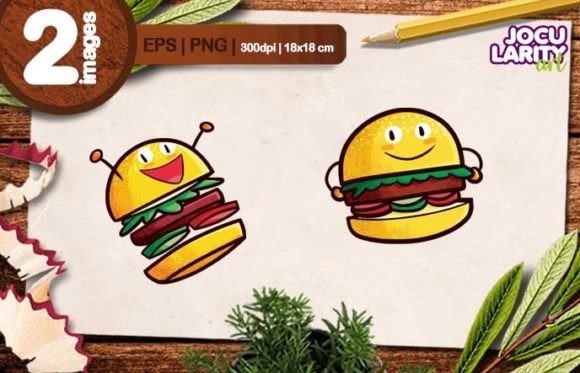
The visual characteristics of this vector are defined by its exaggerated features. We are talking about bold, curving lines, bright primary colors, and a distinct expression of joy. This isn't a photorealistic rendering of a cheeseburger; it is a caricature designed to evoke an emotional response. The "happy" aspect is crucial here. In psychological terms, seeing a smiling character—even an anthropomorphic food item—triggers a mirror neuron response in the viewer. It makes your project feel welcoming. For a designer, this means you have an instant icebreaker. You don't need to convince the audience to like the content; the illustration has already done half the work for you.
Practical Applications for Modern Creators
One of the greatest strengths of this asset is its versatility. Because you are receiving this as a vector file (specifically EPS files editable in Adobe Illustrator), you are not locked into a single color scheme or size. This is critical for maintaining brand consistency. If you are working on a restaurant menu, a food blog header, or a flyer for a local diner, you can scale the Funny Happy Hamburger Cartoon Vector to the size of a billboard or shrink it down for a favicon without losing a single pixel of quality. Vector graphics are mathematical equations, not fixed pixels, meaning your edges stay crisp regardless of the output medium.
Consider the "unboxing" experience for e-commerce businesses. If you sell food products, sauces, or even merchandise related to the culinary world, using this cartoon burger on your paper bags, magnets, or stickers adds a tactile, fun element to your shipping process. It transforms a plain cardboard box into a gift. For digital marketers, the application is just as powerful. Imagine using this vector in your presentation slides. Instead of a wall of text, you use this character to illustrate a "value meal" of services. It breaks the tension in a boardroom and keeps your audience engaged. It works beautifully for greeting cards and invitations too, setting a casual, party-ready tone before the guest even reads the details.
Integrating the Asset into Your Design Hierarchy
Visual hierarchy is about guiding the viewer's eye. A premium font might handle your headlines, but an illustration like the Funny Happy Hamburger Cartoon Vector acts as a focal point or an accent. It draws attention to specific areas of your layout. For example, if you are designing a website, placing the vector near your "Order Now" or "Sign Up" button can subconsciously encourage clicks by associating the action with a positive emotion.
However, balance is key. This is a high-energy design asset. It has a strong personality. If you pair it with a chaotic script font or a grunge handwritten font, the result might look cluttered and unprofessional. A better approach is to pair this playful vector with a clean sans serif font. The geometric simplicity of a sans serif provides a solid foundation that allows the whimsical nature of the burger to shine without overwhelming the viewer. This contrast creates a professional look that feels modern and intentional.
Evaluating Quality and File Specifications
Not all design assets are created equal. A common pitfall for hobbyists and entrepreneurs is downloading low-resolution files that fall apart when printed. This package addresses that standard professional requirement head-on. The inclusion of 2 PNG files at 300 DPI is essential for print work. DPI, or dots per inch, is the measure of print resolution. At 300 DPI, your image will be sharp and clear on physical media, avoiding the "fuzzy" look that plagues amateur designs. Furthermore, the transparent background of the PNGs is a massive time-saver. You don't need to spend hours in Photoshop clipping paths; you can drop the burger directly onto any background color, pattern, or photo.
For those who need to customize the colors to match a specific brand identity, the EPS files are the true workhorses here. Being able to open the vector in Adobe Illustrator means you can modify the mustard yellow to match a Pantone swatch, or adjust the lettuce green to fit a darker, more "gourmet" aesthetic. This level of editability transforms the asset from a static image into a flexible design component.
Strategic Recommendations for Maximum Impact
To get the most out of this asset, think about context. Where does a cartoon burger belong, and where does it feel out of place?
- Best Fit: Casual dining branding, kids' party invitations, food truck wraps, blog post graphics for recipes, and playful social media graphics. It works exceptionally well for "sale" tags or "new item" badges.
- Proceed with Caution: Corporate finance reports, luxury jewelry branding, or formal legal documents. The whimsical nature of the vector clashes with the serious tone required in these sectors.
When testing font pairings, try to match the weight of the illustration. Since cartoon vectors usually have bold, thick outlines, look for typefaces with a medium to bold weight. A very thin, light font might look weak next to the robust illustration. Also, consider the color palette. If your background is busy, use the PNG version. If you are printing on merchandise, ensure you have the vector capabilities to ensure the ink coverage is solid.
Ultimately, the Funny Happy Hamburger Cartoon Vector is a tool for connection. It serves as a versatile piece of modern typography